

Quran Translation vs Tafseer: What’s the Difference?
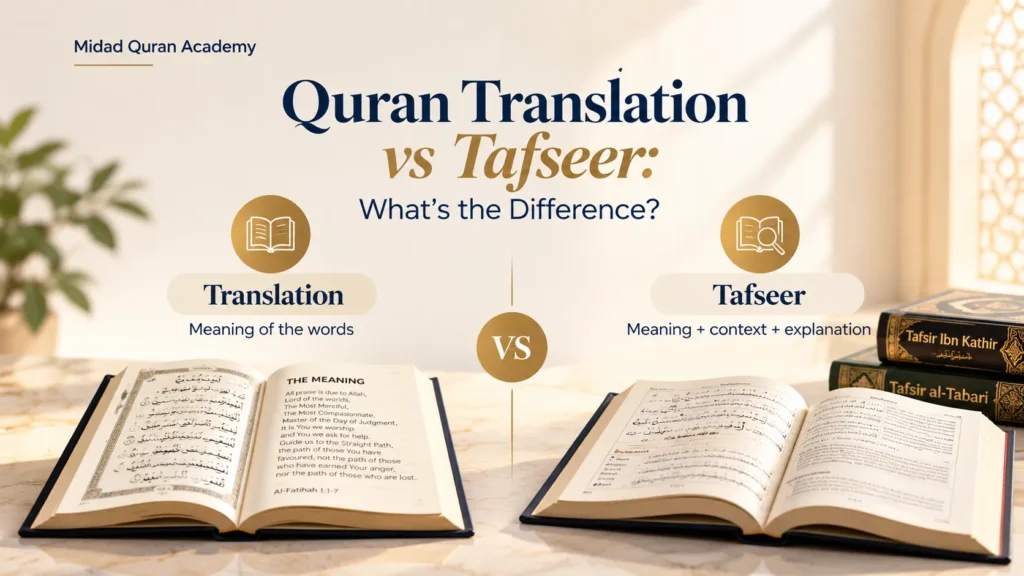
You open an English translation of the Quran and read a verse. You understand the words, but a question remains: What exactly is this verse teaching, and how does it connect with the verses around it? Perhaps you’ve experienced this while reading a familiar Surah. You know what its translation says, yet you’re unsure whether […]
Arabic Letter Recognition: Beyond Memorising the Alphabet
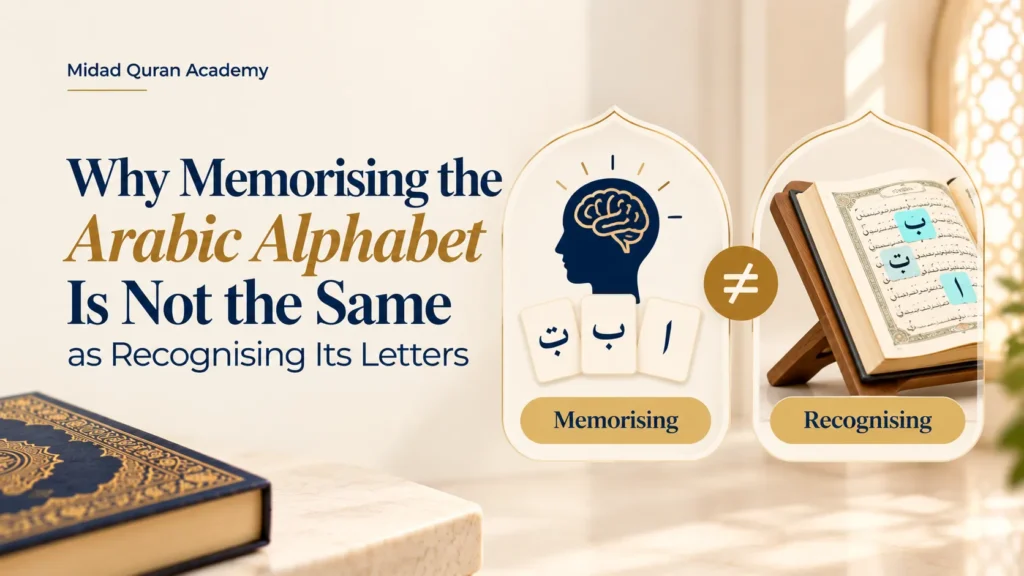
Your child can recite the Arabic alphabet from beginning to end. They have completed several Qaida lessons, and everything seems to be going well. But what happens when you point to one letter in the middle of the page and ask them to identify it? Suddenly, they hesitate. Memorising the Arabic alphabet and recognising Arabic […]
Madd Letters in Tajweed: Alif, Waw and Ya Explained
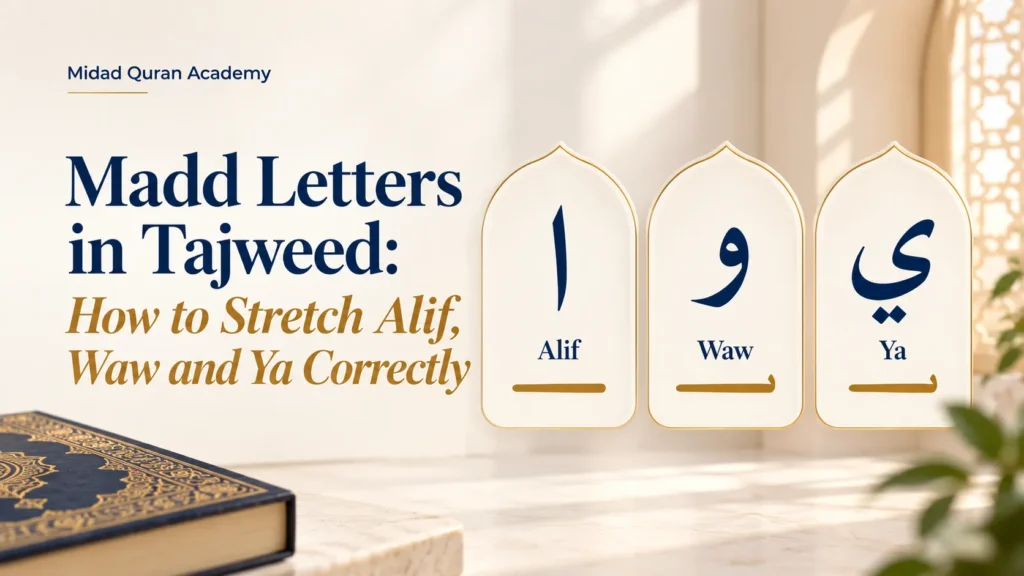
Some Quran learners recognise Arabic letters quite well, but when they begin reading a word, something goes wrong. A sound that should be stretched is read too quickly. Another sound is stretched even though it should remain short. Consider the word قَالَ (qāla). Its Alif creates a long vowel sound. If the learner reads that […]
Noorani Qaida vs Madani Qaida: Which Is Better for Beginners?
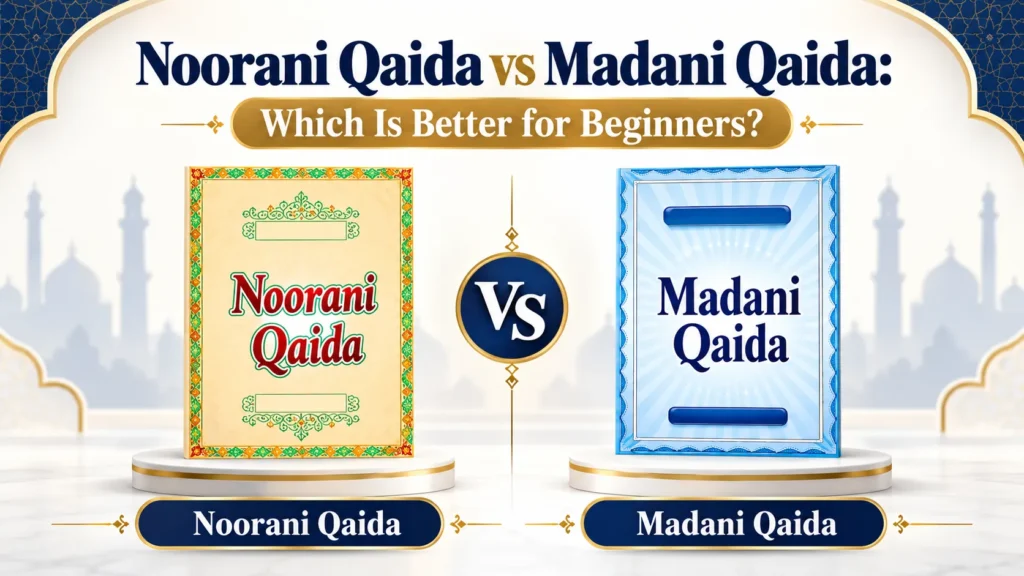
If you’re looking for a book to help your child begin reading the Quran, you may have come across Noorani Qaida, Madani Qaida and several others. Each promises to guide beginners from recognising Arabic letters towards reading Quranic words. But which one should you choose? And does the choice of book really make a difference? […]
How to Revise Weak Hifz: Sabak, Sabqi & Manzil
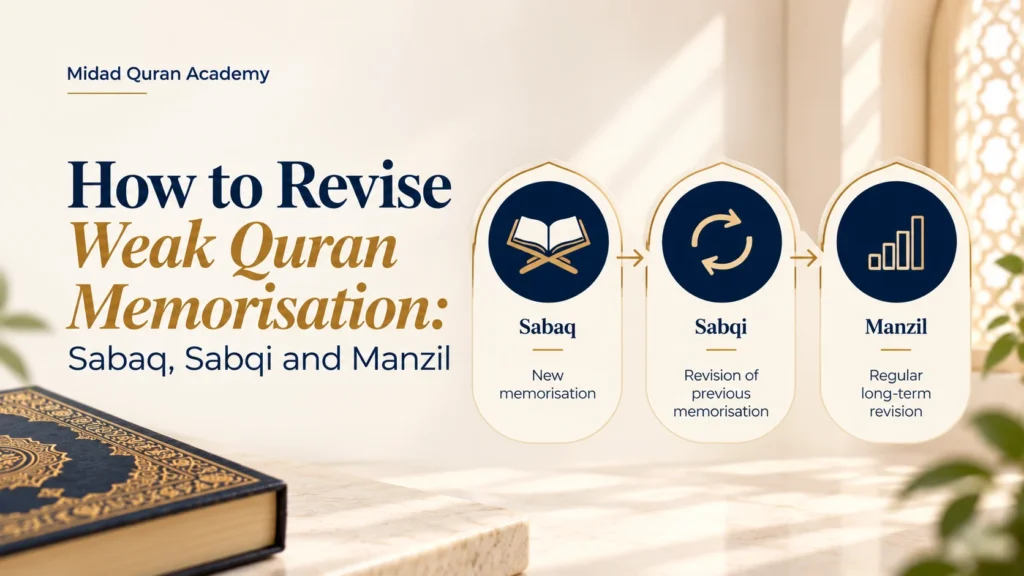
Your child remembered a Surah confidently a few weeks ago. But today, when the teacher asks them to recite it again, they hesitate, forget the next ayah or need help to continue. For parents, this can be worrying. Was all that memorisation lost? Should we start again? Or should the child continue with new lessons? […]
What Comes After Noorani Qaida? A Practical Reading-Readiness Guide
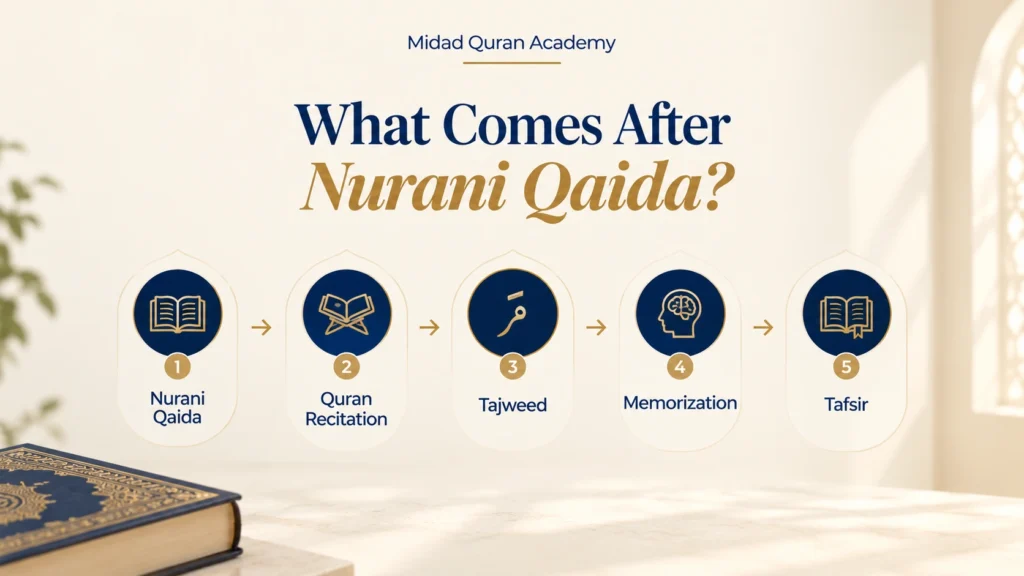
Finishing Noorani Qaida is an encouraging moment. The learner has worked through Arabic letters, reading signs and joined words. Naturally, the next question is: Can they begin reading the Quran now? For learners aiming to read the Quran independently, the usual next step after Noorani Qaida is guided Quran Reading. But reaching the last page […]
What Makes an Online Quran Academy Worth Choosing? A Practical Guide for Parents and Learners
You find an online Quran academy that offers experienced teachers, flexible class times and personal attention. The website looks professional. The course descriptions sound promising. Perhaps there are positive parent reviews too. But before enrolling your child—or beginning lessons yourself—how can you tell whether the academy will actually provide a good learning experience? An online […]
How Parents Can Support Quran Learning at Home Without Pressure
It’s time for your child’s Quran practice. You remind them. They ask for five more minutes. You remind them again, and they become frustrated. Eventually, they sit down to practise, but neither of you feels particularly happy about it. When this happens regularly, even a short Quran assignment can become a source of tension. So […]
What Should Children Learn in Islamic Studies?
Your child might know a few daily Duas, the names of the five prayers and several stories about the Prophets. But how do you know what they should learn next? Should they focus on memorising more Duas, understanding Islamic beliefs, learning Salah or studying the Seerah of Prophet Muhammad ?ﷺ A well-planned Islamic Studies education […]
How to Help a Child Memorise the Quran Without Rushing
Your child comes home from their Quran lesson having memorised a new passage. They’re happy with their progress, and naturally, you want to encourage them. But the following day, they struggle to remember some of the same words. Meanwhile, they still have older Surahs to revise. Should they continue learning something new, or spend more […]